I'm preparing for a dog
Check the region's housing position, the lease and the DogID process before the dog arrives.
English guidance · Belgium · BE
Apartment life with a dog in Belgium crosses several rule-makers. Rental law and animal welfare are regional, DogID links official dog records across the three regions, municipalities and park managers control many outdoor details, and transport operators set boarding conditions. Start with the region and the actual lease, then confirm the dog's chip, DogID record and the route through shared space. Brussels, Flanders, STIB and SNCB provide named examples here, while travel into Belgium follows a separate Belgian and EU document pathway.
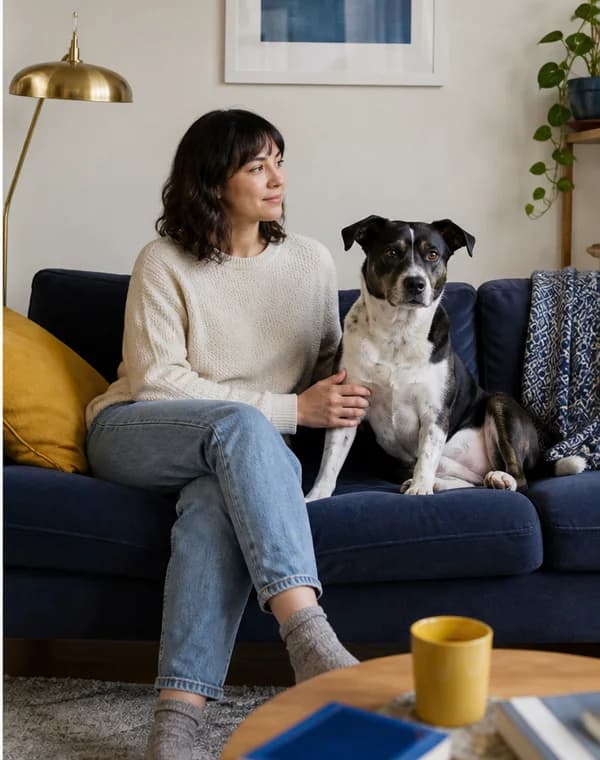
Start with the correct region, housing documents, current DogID record and a workable daily route. Illustrative apartment scene.
Start with the decision in front of you. Local-answer links stay on this page; practical methods continue in published ADL guidance or tools.
Check the region's housing position, the lease and the DogID process before the dog arrives.
Keep the DogID contact details current and recheck the shared-building and outdoor route after a change.
Separate entry documents and DogID work from the housing agreement and first apartment routine.
Identify the region, read the lease and obtain the internal building rules before relying on a general statement.
Belgium's federal portal identifies regional competence for residential leases. Flanders supplies the named rental example, while DogID covers identification across all three regions. Brussels Environment supplies the park example, STIB covers its Brussels network and SNCB covers domestic trains. Belgian federal and EU guidance cover non-commercial pet travel. The actual region, municipality, building and operator still require separate checks. Each fact below keeps the authority’s finding, its scope, ADL’s explanation, and the local check separate.
Belgium's federal portal says the regions are competent for residential rental legislation and directs renters to Flanders, Brussels-Capital or Wallonia. Flemish guidance says a general ban covering every pet will not be enforced, while suitability, nuisance and damage remain relevant and a justice of the peace can decide a dispute. That Flemish position is a regional example, not a single Belgian lease rule.
Scope: Belgium, with a Flemish residential-rental example
Limit: Check the competent region, signed lease, building rules and the specific dog's suitability. Do not apply the Flemish summary to Brussels or Wallonia, and obtain qualified advice before challenging a clause or enforcement action.
Name the competent region, obtain the signed lease and internal rules, and identify what each provision governs. Walk the entrance, corridor, lift and shared grounds with noise and handling in mind. Describe the dog and care plan accurately, and seek qualified regional advice if a restriction or complaint is disputed.
DogID describes itself as the official dog-registration platform commissioned by Belgium's three regions. Its guidance says dog identification and registration are compulsory, the microchip is placed by a veterinarian, and the final registration certificate belongs in the dog's passport. The registered responsible person must report changes such as an address, responsible person or death, and an imported dog should be taken to a veterinarian for registration.
Scope: Belgium, DogID across the three regions
Limit: Confirm the applicable regional timing and imported-dog procedure with a veterinarian or competent regional authority. A readable chip or passport alone does not prove that DogID holds the current responsible person and address.
Ask a veterinarian to scan the chip and compare it with the passport and DogID record. Confirm the responsible person, address and public-contact settings, then submit any required change and save the resulting certificate. For an imported dog, confirm the regional timing before arrival.
Brussels Environment says dogs in regional parks must be kept on a leash except in clearly identified off-leash zones. The handler must remain in control, prevent nuisance or damage and collect the dog's excrement. Dogs are excluded from playgrounds, children's areas and sports grounds. Park opening times, temporary closures, protected spaces and entrance signs still shape the usable route.
Scope: Brussels-Capital regional parks
Limit: This source covers Brussels regional parks, not every municipal green space, forest or Belgian park. Check the named site, municipality, entrance signs, hours and temporary conditions before using a route.
Walk the complete route and inspect every entrance sign. Record doors, lift waits, crossings, lead status, cleanup points, lighting and opening hours. Choose a permitted backup and give both routes, equipment and control expectations to every caregiver.
STIB's current transport rules require every dog on its network to be kept on a lead. A dog presenting a potential danger to passengers must wear a muzzle, and passengers must follow staff instructions for the safe operation of the service. These conditions apply to STIB's Brussels network and do not answer SNCB ticket conditions or the rules of another local operator.
Scope: STIB-MIVB network in Brussels
Limit: Check the current fare, assistance-dog arrangements, equipment and any staff direction before travel. Crowding, replacement services and a connecting operator may change what is practical or permitted.
SNCB permits a small pet to travel free in a basket, cage or crate no larger than its published dimensions. An animal travelling on a lead needs the current Pet Supplement for domestic trains. A muzzle is recommended rather than universally compulsory, but the train manager may request one; the animal may not use seats or tables or cause a nuisance. Guide and recognised assistance dogs have a separate exemption pathway.
Scope: SNCB-NMBS domestic trains
Limit: Check the current carrier dimensions, supplement, assistance card and train manager conditions before boarding. International trains, replacement buses and connecting local operators can follow different rules.
List every operator in both directions, then check the dog ticket, carrier dimensions, lead, muzzle, assistance status and placement conditions. Practise the equipment before travel, allow for crowded boarding and keep an alternative for urgent care or a refused connection.
FPS Public Health explains that EU travel with a dog requires an approved identifier, valid rabies vaccination and an EU pet passport. Rabies vaccination starts from twelve weeks and a first vaccination requires at least twenty-one days before travel. A dog arriving from outside the EU generally uses an animal-health certificate instead of the passport, and some origins require a rabies-antibody test with sequencing and waiting periods that must be planned in advance.
Scope: Non-commercial pet travel to Belgium under Belgian and EU guidance
Limit: This is not a complete entry checklist. Verify origin, transit, age, identification date, rabies history, antibody testing, traveller relationship, certificate, declaration and entry point with the competent authority and veterinarian before booking.
Use current Belgian and EU origin guidance, ask the authorised veterinarian for a dated sequence and confirm the passport or certificate. Check transit and the traveller relationship, then connect the arrival date to DogID registration and the first apartment routine.
A local answer becomes usable only when it fits the route through the actual building. These are the strongest intersections to plan next.
Time the journey through the private home, common corridor, lift and street door. Check the internal rules and how the dog and caregiver will manage if the usual route is unavailable.
Confirm which areas are private and which are common before planning dog access. Create safe barriers and shelter, and keep leads, towels and cleaning supplies ready inside.
Give the caregiver the building route, local signs, required transport equipment and current contacts. Include an alternative for severe weather, a closed park or an urgent appointment.
Entry documentation is a separate official task from finding and setting up the apartment.
FPS Public Health explains that EU travel with a dog requires an approved identifier, valid rabies vaccination and an EU pet passport. Rabies vaccination starts from twelve weeks and a first vaccination requires at least twenty-one days before travel. A dog arriving from outside the EU generally uses an animal-health certificate instead of the passport, and some origins require a rabies-antibody test with sequencing and waiting periods that must be planned in advance.
Scope: Non-commercial pet travel to Belgium under Belgian and EU guidance
Limit: This is not a complete entry checklist. Verify origin, transit, age, identification date, rabies history, antibody testing, traveller relationship, certificate, declaration and entry point with the competent authority and veterinarian before booking.
Use the local answer above, then choose the published ADL route that matches the apartment problem you need to solve.
Bring the regional position, dog profile, exact documents and shared-space questions into one discussion.
Combine the common-area route, permitted destination, cleanup and backup in one plan.
Plan toilet trips, activity, rest and reliable help around the household's capacity.
Connect entry documents with DogID, housing arrangements and the first apartment routine.
Belgium's federal portal identifies regional competence for residential leases. Flanders supplies the named rental example, while DogID covers identification across all three regions. Brussels Environment supplies the park example, STIB covers its Brussels network and SNCB covers domestic trains. Belgian federal and EU guidance cover non-commercial pet travel. The actual region, municipality, building and operator still require separate checks.
This is source-linked orientation, not individual legal or veterinary advice. A disputed lease or internal rule, nuisance claim, assistance-dog arrangement, dangerous-dog measure and a particular animal's entry eligibility need their own assessment.
Belgium allocates residential rental and animal-welfare powers to its regions, while DogID provides a shared official dog database. Brussels Environment manages regional park rules, and STIB and SNCB apply conditions to their own services. These sources support a Belgium guide with named Flemish and Brussels examples, not one rule for every region, municipality, building or journey.
Limit: Verify the region, municipality, building and operator for the actual address. This guide does not cover every local sanction, dangerous-dog measure, assistance arrangement or commercial movement.
Choose the questions that matter now. The Starter Plan orders the published apartment, toilet, routine, moving, rental, and tool routes around them.