
Editorially checked
How to set up an apartment for a dog
Prepare the home, building, route outside, first-week logistics, and backup support as one workable apartment setup.
- Audience
- People preparing an apartment for a new dog or an upcoming move
- Risk class
- Low
- Published
- July 27, 2026
- Editorially checked
- October 2, 2026
- Updated
- October 2, 2026
- Next review
- April 2, 2027
Direct answer
A dog-ready apartment includes the building and route outside, not only the rooms inside the unit.
Before the dog arrives, confirm the written pet terms, walk the complete exit and toilet route, secure household hazards, create a calm home base, organize practical living zones, stage only the day-one essentials, update identification, and confirm who can help if the ordinary plan fails. Keep the first week simple enough to observe what this dog actually needs.
General preparation guidance. It does not replace veterinary advice, a behavior assessment, building rules, or local law.
Start with the building, not the shopping list
Read the current lease, pet addendum, and building rules. Record any restrictions, required records, access limits, lift procedures, waste rules, and contacts. This guide does not interpret those terms for you.
Do not treat the setup as ready until one named person can complete the first arrival, toilet, rest, and delayed-return sequence with the actual keys, access rules, equipment, and backup contact. A room-only checklist misses the apartment constraint.
Checklist
- Written pet terms and building contacts saved
- Primary and backup exit routes walked
- Closest suitable toilet locations identified
- Lift, stair, lobby, and shared-door constraints recorded
- A realistic first-week work and support schedule agreed
Walk the real route outside
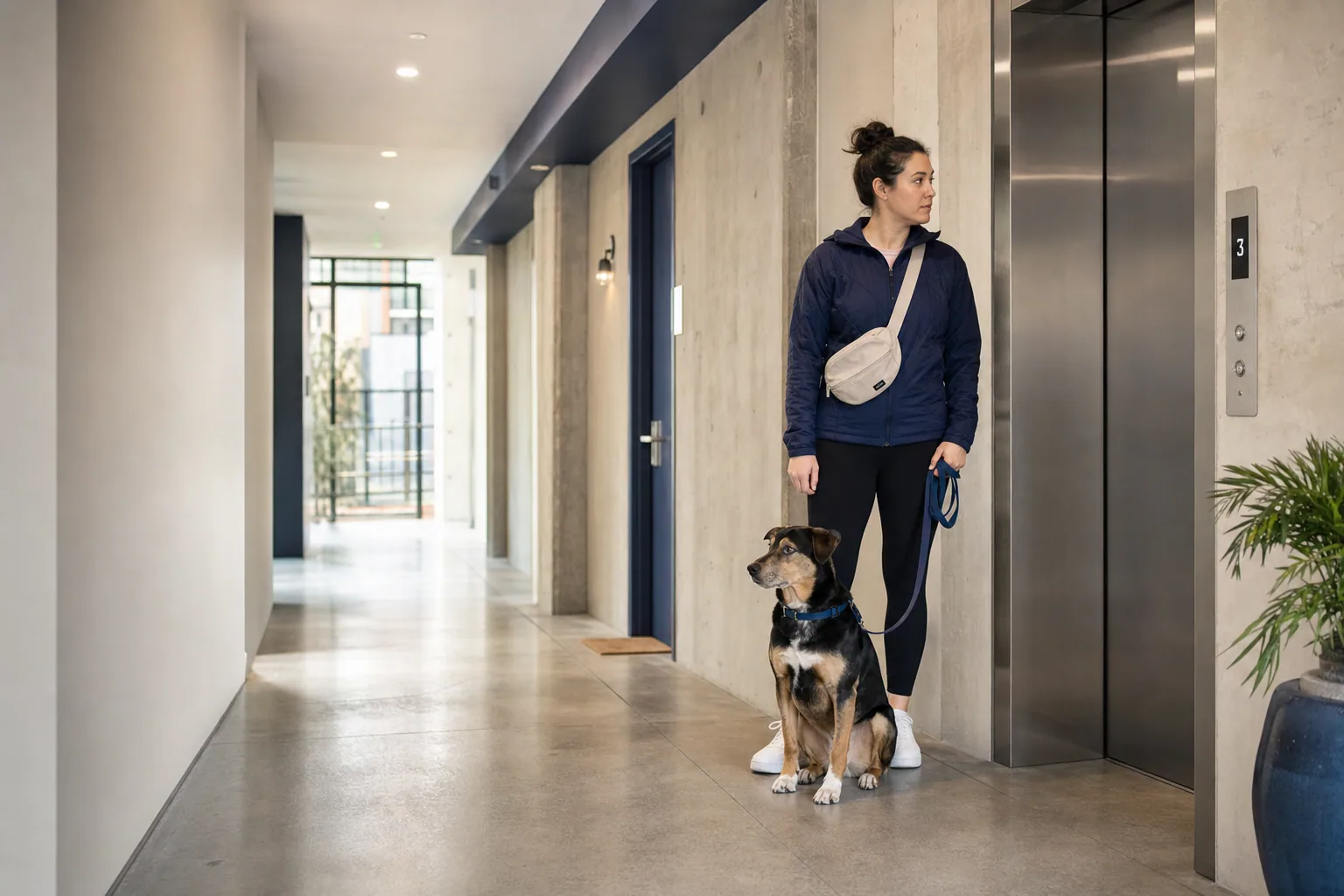
Walk from the apartment door to the intended outdoor destination using the route you will use with the dog. Note doors that close quickly, narrow corridors, slippery surfaces, lift waits, stair access, busy periods, lighting, waste arrangements, and the final distance outside.
Name a usable backup for an outage, blocked entrance, severe weather, or unavailable caregiver. A backup is real only when it is permitted, reachable, and understood by the person expected to use it.
- Apartment doorKeys, equipment, door control, and a clear departure point
- CorridorDistance, blind corners, surfaces, neighbors, and other dogs
- Lift or stairsWaits, access rules, outages, and a usable alternative
- Lobby and exitShared doors, resident traffic, lighting, and weather exposure
- Outdoor destinationA permitted location, waste arrangements, and a defined backup
Make the apartment safe at dog height
Inspect the apartment from the dog's height. Secure electrical cords, windows, balcony access, cleaning products, medicines, bins, food, small swallowable items, and gaps where a dog could become trapped. Check plants and any pest-control products left in the home.[1][2]
Checklist
- External doors, windows, screens, and balcony access secured
- Cords, medicines, cleaners, food, and waste stored safely
- Plants and pest-control products checked
- Small objects and unstable furniture removed from reach
- Maintenance workers and housemates know the door-management plan
Create one quiet, usable home base
Choose a calm resting place away from the busiest walkway, television, front door, and strong temperature changes. A dog should be able to rest undisturbed and move away from something that worries them.[3]
Use a room, gated area, or familiar resting setup that suits the individual dog. A crate is only appropriate when the dog is already comfortable with it and it is used for short-term management, not as a permanent living area.[2][3]
Checklist
- Comfortable bed or resting surface
- Fresh water in a stable location
- Usual food and feeding equipment
- Safe, suitable chew and enrichment options
- Gate or closed-door plan where temporary separation is needed
- Familiar blanket or item ready for the first days
Create practical living zones
Give recurring tasks a clear place so ordinary apartment life needs fewer rushed searches and blocked walkways. The arrangement can be compact; each zone only needs to support its function safely.
- 01
Exit station
Keep secure walking equipment, keys, waste bags, and weather items near the route without obstructing the door or corridor.
- 02
Rest zone
Place a suitable resting area away from the busiest household path and give the dog room to move away from activity.
- 03
Food and water zone
Use stable, accessible locations that do not create a trip hazard or conflict with current professional instructions.
- 04
Activity zone
Keep a small number of known safe and suitable enrichment items where they can be used and put away deliberately.
- 05
Wet-entry zone
Stage a towel and cleaning supplies for paws, rain, mud, and accidents without leaving unsafe products within reach.
- 06
Records and storage
Keep care instructions, building contacts, backup details, and equipment together while protecting sensitive access information.
Set up the toilet and access plan
Choose the primary toilet destination and confirm the complete route, equipment, waste disposal, and return. If access can fail, define the backup route or toilet option before the first rushed trip rather than improvising at the doorway.
Apartment setup can organize access, but it cannot decide an individual dog's toilet-learning method, suitable interval, or outdoor health risk. Use the dedicated potty guidance for those decisions.
Checklist
- Primary destination and route confirmed
- Equipment can be put on promptly and safely
- Waste and wet-entry arrangements are ready
- Lift, stair, entrance, or weather failure has a defined response
- Every caregiver knows which plan is primary and when a backup applies
Prepare a first week you can observe
Avoid filling the first days with visitors, busy outings, and repeated tests. Start with a small area, familiar items, predictable care, and supervised exploration. Some dogs settle quickly while others need more time.[1][2]
Record practical observations: toilet timing, appetite, water, rest, reactions to doors and shared-space sounds, recovery after walks, and comfort when you move around the apartment. Change the environment or schedule one variable at a time so you can tell what helped.
Put records and responsibilities in one place
Keep identification, veterinary contacts, current medication or food instructions, building contacts, rental documents, and backup-care details together. Update the microchip registry and visible identification when your address or phone number changes.[4]
Assign the first arrival, toilet route, workday coverage, delayed-return fallback, and building contact to named people. Store entry codes and other sensitive access details separately from a general household checklist.
Checklist
- Microchip registry and visible identification checked
- Veterinary and emergency contacts saved
- Current professional instructions available
- Building and rental documents easy to find
- Backup key, caregiver, and contact order confirmed
Buy for day one, then learn what can wait
Start with the equipment and information required for safe access, familiar food, water, rest, toilet trips, cleaning, identification, and known care. Delay optional systems and duplicate products until you have observed the dog's size, habits, preferences, and the apartment's actual friction points.
| Setup area | Ready on day one | Can wait for observation |
|---|---|---|
| Access | Keys, secure equipment, exit route, waste bags | Extra route accessories and duplicate storage |
| Home base | Water, a suitable resting place, familiar items | Permanent furniture layout and decorative storage |
| Food and care | Usual food and current professional instructions | New feeding systems or a large product assortment |
| Records | Identification, contacts, building details, caregiver backup | Nonessential organizers and printed extras |
| Activities | A few known safe and suitable options | Multiple untested toys, devices, and subscriptions |
Adjust the setup to the situation in front of you
Keep the same setup functions, then change the route, space, supervision, or support plan to fit the dog, household, and building.
- 01
Puppy
Reduce route delay, protect more hazards, plan more supervision, and use veterinary guidance for suitable outdoor locations.
- 02
Adult or rescue dog
Begin with known history where available, one calm base, controlled access, and enough simplicity to observe the individual dog.
- 03
High-rise
Include lift waits, corridors, access controls, lobby traffic, outages, and the final outdoor distance in every route.
- 04
Renter
Keep written pet terms, required records, property contacts, and factual dog information ready without interpreting the lease or local law.
- 05
Studio or small apartment
Separate functions through placement and timing instead of trying to create full rooms for each activity.
- 06
Single owner
Remove unnecessary setup steps and confirm one person who can enter, follow the plan, and cover a delay.
- 07
Busy worker
Map the first full door-to-door absence, ordinary delays, caregiver access, and fallback coverage before the first workday.
- 08
Moving from a house
Rebuild every function that direct private outdoor access previously made easy, especially toilet trips, equipment, and transitions.
Final apartment setup checklist
The setup is ready when the home, shared building, route outside, people, and first-week plan can work together without relying on an untested assumption.
Checklist
- Written pet terms, building contacts, and access procedures are recorded
- The primary and backup routes outside have been walked
- Doors, windows, balcony access, cords, cleaners, medicines, bins, plants, and small objects have been checked
- A calm home base, water, familiar food, rest, and suitable day-one equipment are ready
- Exit, wet-entry, activity, care-record, and storage zones have clear places
- The toilet destination, waste plan, weather response, and deeper potty route are understood
- Identification, current professional instructions, rental records, and emergency contacts are available
- Arrival, first night, workday coverage, and delayed-return responsibilities are assigned
- A backup person can enter the building and use the real route
- Optional purchases can wait until observations show what is useful
Evidence record
Sources, authorship, and limitations
Sources support the cited practical claims. Apartment Dog Living is responsible for the synthesis, apartment-specific framing, and any errors.
- Moving With Your PetASPCAAnimal welfare organization guidance. Accessed July 27, 2026.
- Adoption Tips: Preparing Your Home for a Dog or CatASPCAAnimal welfare organization guidance. Accessed July 27, 2026.
- Creating a Good Home for Your DogRSPCAAnimal welfare organization guidance. Accessed July 27, 2026.
- Microchipping Your PetAmerican Veterinary Medical AssociationVeterinary association guidance. Accessed July 27, 2026.
- Author
- Apartment Dog Living editorial team
- Editor
- Apartment Dog Living editorial team
- Reviewer status
- Editorial check complete; no qualified behavior review claimed.
- Geographic scope
- General preparation guidance. It does not replace veterinary advice, a behavior assessment, building rules, or local law.
- Published
- July 27, 2026
- Editorially checked
- October 2, 2026
- Updated
- October 2, 2026
- Next review
- April 2, 2027
- Corrections
- Publication correction collection is not active. Review the current process in the trust center.
Continue with the complete setup system
Apartment setup and the first weeks
Work through moving, renting, toilet access, daily routine, and the remaining setup decisions.