I'm preparing for a dog
Check the state rental process, building scheme and local registration before the dog arrives.

English guidance · Australia · AU
Apartment life with a dog in Australia depends on the state or territory, local council, housing agreement and building scheme. In NSW, a renter's pet application, strata notification and Pet Registry record are separate checks. Your council and daily transport route can add more. Federal biosecurity rules sit on a different timeline and can require many months of preparation before a dog arrives from overseas. The NSW, Victoria and Sydney examples below show how to build a plan without treating one jurisdiction as the answer for all Australia.
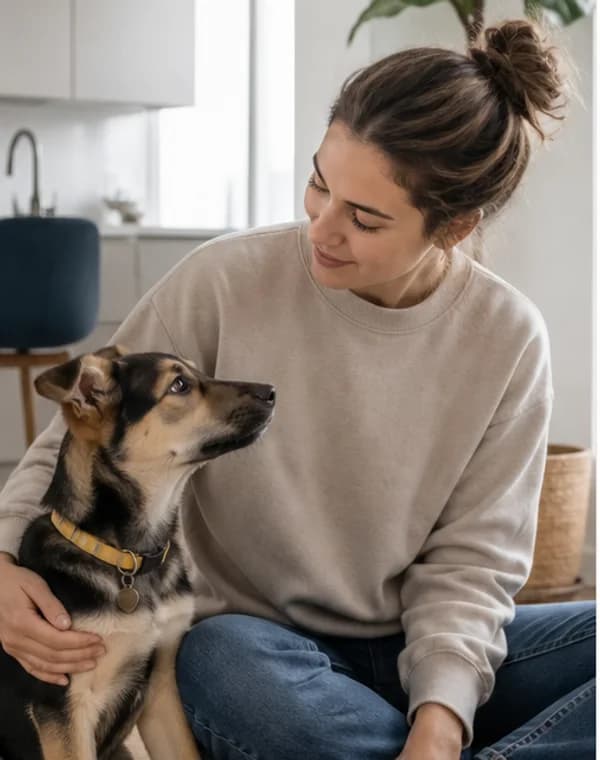
Bring the housing approvals, local records and daily route into one workable plan. Illustrative apartment scene.
Start with the decision in front of you. Local-answer links stay on this page; practical methods continue in published ADL guidance or tools.
Check the state rental process, building scheme and local registration before the dog arrives.
Keep ownership and address records current, then test the council route and care connections.
Separate an interstate address change from federal import preparation and quarantine.
Identify the state rules and ask about both landlord consent and the strata scheme.
Federal sources cover importing dogs. NSW provides the main examples for rentals, strata, registration and public transport; the City of Sydney supplies the outdoor-space example. Victoria is included only as a comparison showing that rental procedures vary. Verify the state or territory, council, strata scheme and operator for the actual address. Each fact below keeps the authority’s finding, its scope, ADL’s explanation, and the local check separate.
NSW Fair Trading says tenants need landlord consent before keeping an animal, other than an assistance animal, and must use the standard pet application form. The landlord has 21 days to respond, can refuse only for specified reasons and may set reasonable conditions. If no response is given within the period, the pet is taken to be approved without conditions.
Scope: New South Wales residential tenancies
Limit: Check the current form, delivery date, refusal grounds and any conditions. Existing approvals, assistance animals and residential land-lease communities can follow different details. A rental approval does not itself complete a strata process.
Consumer Affairs Victoria says renters who want a pet must ask the rental provider for permission. The provider cannot unreasonably refuse and must apply to VCAT for an order if they want to refuse the request. Renters remain responsible for cleanliness, avoiding damage and preventing nuisance. This confirms that one state's rental procedure should not be extended nationwide.
Scope: Victoria residential tenancies
Limit: This is a Victoria comparison, not a guide to every step or exception. Use the current Victorian form and guidance for a Victorian address, and check a different state or territory separately.
NSW Government says an owners corporation cannot stop a resident from owning a pet unless the pet causes unreasonable interference, such as where it is dangerous or restricted. A scheme may require written notification and can make its own pet by-laws, but blanket pet bans are not valid. Tenants still need the property owner's consent under the separate rental process.
Scope: New South Wales strata schemes
Limit: Read the actual scheme by-laws and follow its notification or application process. This summary does not decide whether a particular dog's behaviour amounts to unreasonable interference or resolve an assistance-animal or tenancy dispute.
Identify the state first, use its current pet-request process and keep dated copies. Obtain the scheme's by-laws and follow any valid notice step. Describe the dog and routine accurately, ask about lifts and common areas, and seek local advice if a refusal or interference claim is disputed.
Service NSW says pet dogs and cats must be microchipped before registration on the NSW Pet Registry, with registration due from 12 weeks of age or when ownership transfers earlier. Registration covers the animal for life even when the owner changes. A dog arriving from interstate or overseas needs additional documents, and a registration fee applies.
Scope: NSW Pet Registry
Limit: Check current timing, fees, additional charges, proof and arrival forms. Lifetime registration does not mean ownership or address details can remain stale, and another state or territory can use a different system.
Service NSW says the former owner is responsible for transferring official ownership of a dog or cat, either online through the NSW Pet Registry or through a local council. A pet must be microchipped before it is sold or given away. Where the paper process is used, the change-of-owner form must be submitted to council within 14 days.
Scope: NSW change of pet ownership
Limit: Confirm that the transfer has completed and the new profile shows the correct dog and keeper. An unregistered animal, missing former keeper or interstate record may need additional evidence and a different procedure.
Scan or verify the microchip, check the registry record and confirm who must initiate the ownership transfer. Gather interstate or overseas documents before approaching the registry or council. Save the completion record and update contact details after the move.
The City of Sydney says dogs must be leashed in public places except designated off-leash parks. Some off-leash spaces operate only at certain times, so owners should check the signs at the main entrance. Dogs must remain under effective control, waste must be collected, and dogs are excluded from specified places such as children's play areas and signposted recreation areas.
Scope: City of Sydney public places
Limit: This is a City of Sydney example. Check the council, current park listing, entrance signs, restricted-dog conditions and temporary closures. An off-leash designation does not grant access to private strata common property.
Walk the full route and inspect the signs. Record shared doors, lift waits, crossings, waste bins, water and lighting. Choose a legal backup, keep the leash ready until the designated area and make sure every caregiver can maintain effective control.
Transport for NSW says pets are not allowed at metro or train stations or on metro, train or coach services. A pet in a suitable container may travel on a bus, ferry, light rail or taxi only with permission from the relevant driver, crew or staff. Capacity, cleanliness, behaviour and safe placement also affect whether the animal is accepted. Accredited assistance animals have a separate pathway.
Scope: Transport for NSW network
Limit: Permission is not guaranteed, and the carrier requirement can make this impractical for a larger dog. Check the specific service, replacement transport and return journey. Other states and private operators have their own rules.
Check every mode in both directions, measure a suitable carrier and ask the operator before relying on the trip. Include walking distance from the apartment, weather and waiting areas. Maintain a booked or tested alternative for urgent care.
The Department of Agriculture's guided import process first asks for the dog's country of export and shows whether that country is approved. A dog from a non-approved country must move through an approved country and meet the stated residence and preparation conditions. Group 2 and 3 pathways can require official identity verification, veterinary tests and treatments, an import permit, approved travel arrangements and post-entry quarantine at Mickleham. The Group 3 guide advises allowing at least six months and explains that identity verification can affect the minimum quarantine period.
Scope: Australian dog-import pathways
Limit: This is not an import checklist. Run the current official guide for the country of export and dog, then follow BICON and the issued permit exactly. Prohibited breeds, assistance dogs, transit, missing documents and biosecurity findings can change eligibility, timing and quarantine.
Use the current guided pathway for the export country, identify the official veterinarian and make a dated import plan. Do not assume a passport replaces required identity evidence. Coordinate the permit, quarantine booking, release transport, council records and first apartment routine.
A local answer becomes usable only when it fits the route through the actual building. These are the strongest intersections to plan next.
Time the trip through the lot door, common corridor, lift and building exit. Check where the scheme requires a leash or other handling and what happens when the lift is unavailable.
Confirm which spaces belong to the lot and which are common property. Plan shade, barriers, waste handling and a place inside for wet leads and cleaning supplies.
Shift activity away from the hottest period and confirm how the dog will reach care when public transport is unsuitable. Give the caregiver the building route, local rules and emergency option.
Entry documentation is a separate official task from finding and setting up the apartment.
The Department of Agriculture's guided import process first asks for the dog's country of export and shows whether that country is approved. A dog from a non-approved country must move through an approved country and meet the stated residence and preparation conditions. Group 2 and 3 pathways can require official identity verification, veterinary tests and treatments, an import permit, approved travel arrangements and post-entry quarantine at Mickleham. The Group 3 guide advises allowing at least six months and explains that identity verification can affect the minimum quarantine period.
Scope: Australian dog-import pathways
Limit: This is not an import checklist. Run the current official guide for the country of export and dog, then follow BICON and the issued permit exactly. Prohibited breeds, assistance dogs, transit, missing documents and biosecurity findings can change eligibility, timing and quarantine.
Use the local answer above, then choose the published ADL route that matches the apartment problem you need to solve.
Bring the dog profile, state process and building questions into one clear conversation.
Combine the common-property route, council destination, cleanup and backup in one plan.
Plan activity, rest, toilet trips and reliable help around weather and transport limits.
Connect federal import preparation and release with local records and the first apartment routine.
Federal sources cover importing dogs. NSW provides the main examples for rentals, strata, registration and public transport; the City of Sydney supplies the outdoor-space example. Victoria is included only as a comparison showing that rental procedures vary. Verify the state or territory, council, strata scheme and operator for the actual address.
This is source-linked orientation, not individual legal or veterinary advice. A tenancy or strata dispute, assistance-animal accommodation, restricted or declared dog, interstate move and a particular animal's import eligibility need their own assessment.
NSW and Victoria publish different rental procedures; NSW separately operates strata and companion-animal frameworks; the City of Sydney publishes local outdoor rules; and the Australian Government controls imports. These sources support a national orientation with bounded examples, rather than one rule for every Australian apartment, pet record, park or journey.
Limit: Verify the state or territory, council, scheme and operator for the address. This page does not describe every jurisdiction, restricted-dog system, assistance-animal process or interstate move.
Choose the questions that matter now. The Starter Plan orders the published apartment, toilet, routine, moving, rental, and tool routes around them.