
Your First Dog in an Apartment: What You Need to Know
Bringing home your first dog is exciting and a big step. This guide walks you through the apartment-living decisions that matter, in the right order, so you can prepare well and avoid preventable problems.
Get a practical starting route for your home, lifestyle, and dog.

Can a first-time owner have a dog in an apartment?
Yes. Many first-time owners can live successfully with a dog in an apartment. What matters is whether the dog, home, building, routine, and support fit together, and whether you plan the everyday logistics before they become problems.
The key decisions, in the right order
You do not need to know everything about dog ownership before you start. You need to understand the apartment-living decisions that matter, make them in the right order, and know where to go when the next question appears.
- 1
Choose
Understand the life you can offer and find the right fit.
- 2
Confirm
Check your apartment, building, and written rules.
- 3
Prepare
Set up the home and get the basics ready.
- 4
Arrive
Bring your dog home and make the first days simple.
- 5
Establish
Create a routine that works for ordinary life.
- 6
Observe
Learn what works for this dog in this environment.
- 7
Adjust
Change the plan as you learn more over time.
What to work through before and after arrival
Each route answers one decision. You do not need to read them all at once.

1. Before choosing the dog
Look at your work, lifestyle, building, and support network before deciding what kind of dog is realistic for you.
Choose the right apartment dog
2. Check your apartment and building
Check pet rules, floor level, lifts, shared spaces, and nearby outdoor access before you commit.
Check apartment suitability
3. Prepare your apartment
Make the home safe, comfortable, and ready for your dog's arrival, including the route through the building.
Set up your apartment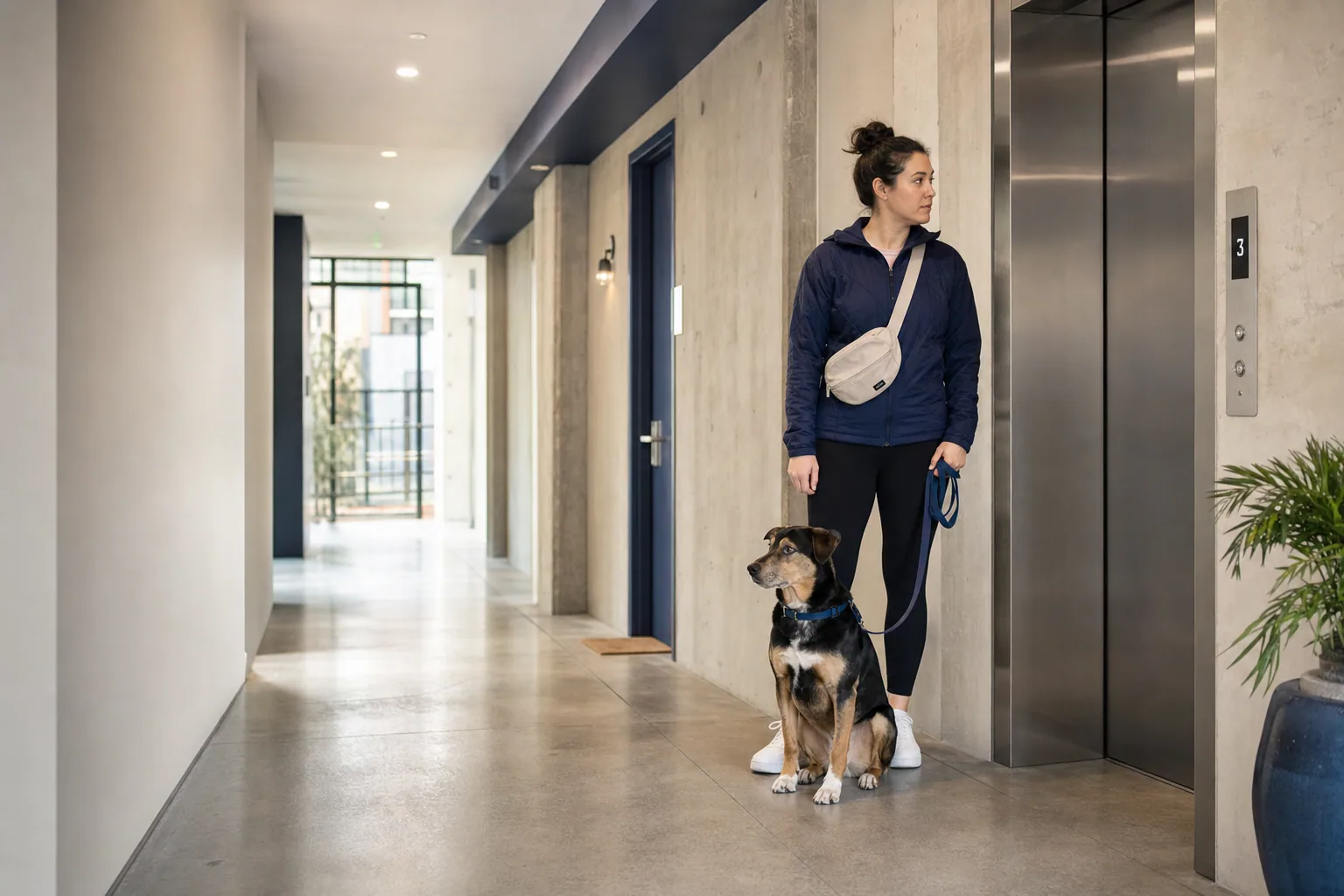
4. Plan your outdoor access
Walk the route from your front door to a suitable toilet and walking area before your dog arrives.
Plan potty and outdoor access
5. Create a realistic routine
Your first routine does not need to be perfect. It needs to fit your workday, building, and support.
Build your apartment dog routine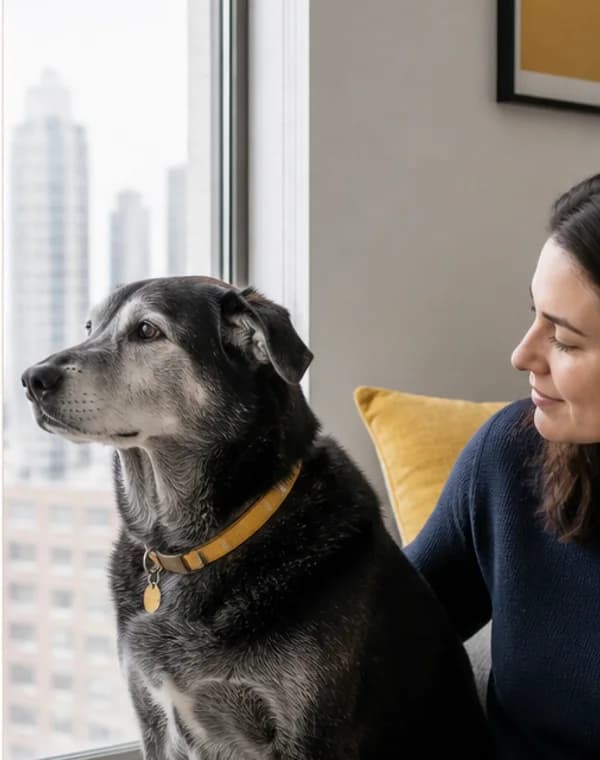
6. Plan for time away
Work out the real door-to-door absence, the support available, and what happens when the day runs late.
Plan for time away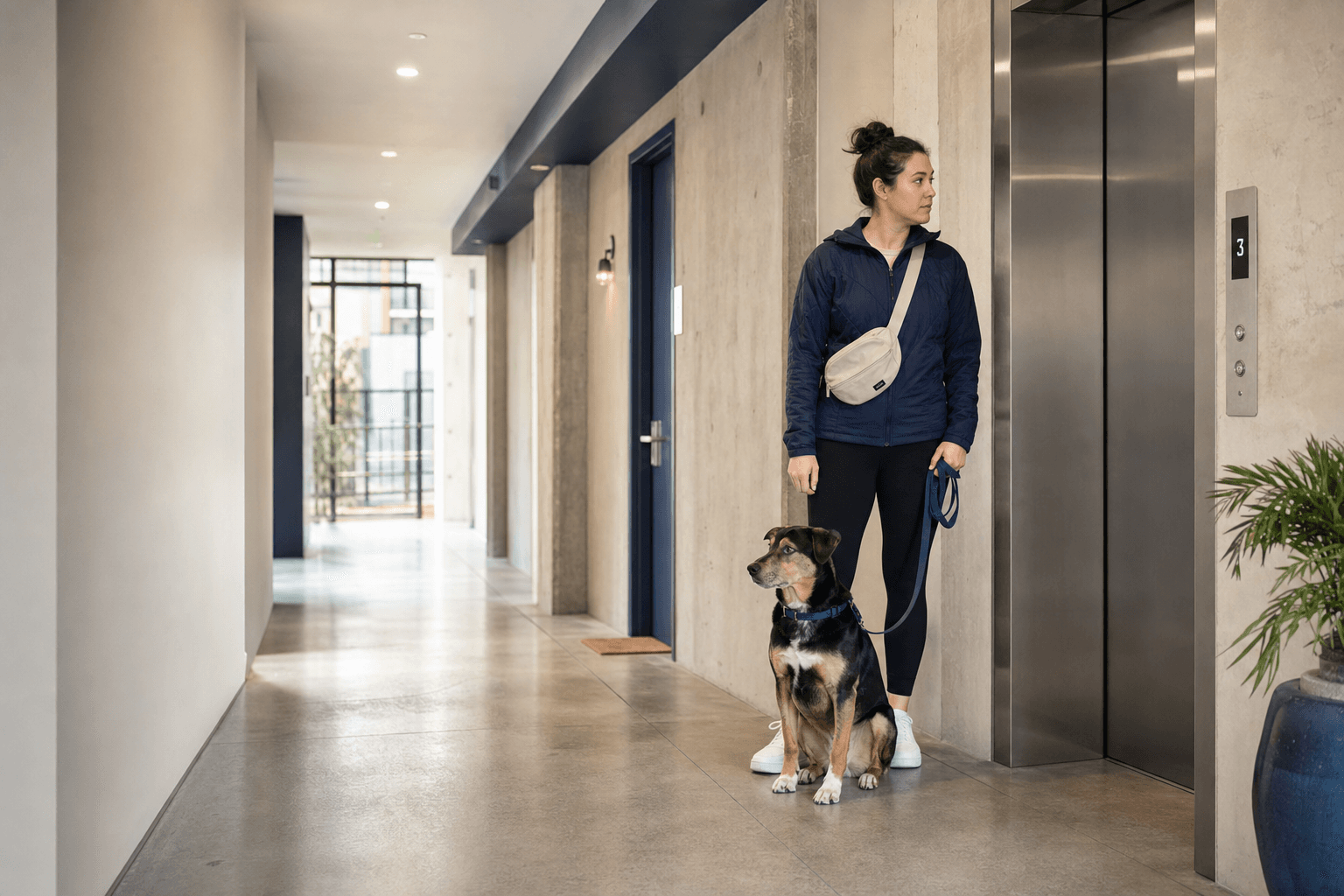
7. Get comfortable with shared spaces
Lifts, corridors, entrances, and lobbies are part of your dog's everyday environment too.
Understand building life
8. Use the first week to learn
Keep the first days simple, establish the basic routes, and notice what works for the dog you brought home.
Prepare for the first weekCommon things first-time owners underestimate
- How much the building route affects the day
- How often small logistics repeat
- How useful a real backup person becomes
- Why size alone does not determine apartment fit
- Why the first routine will probably change
- How different the individual dog may be from your expectations
What you do not need to solve today
Focus on fit, written housing rules, the building route, and basic preparation.
Keep the home calm and establish the essential routes and household rhythm.
Observe the actual dog before buying more or redesigning the whole plan.
Some concerns may never be relevant to your dog, home, or building.
Not sure what to do first?
Build an Apartment Dog Starter Plan from what you know about your home, lifestyle, and dog. The tool keeps your selections in this browser and routes you to the guidance that is ready now.
First-time apartment dog owner FAQs
Short answers for the questions that often appear before a first dog comes home. Open the linked route only when you need the deeper decision.
Can a first-time dog owner live successfully with a dog in an apartment?
Yes. A first-time owner can build a good apartment life when the individual dog, household capacity, home, building route, routine, and support fit together. Start with the life you can reliably provide, then choose and prepare around that reality.
What should I prepare before bringing a dog into an apartment?
Check the written housing rules, make the home safe, walk the route outside, prepare a calm resting area and essential supplies, plan the first-week routine, and confirm who can help if the ordinary plan fails.
What is the hardest part of having a dog in an apartment?
There is no single hardest part. Common friction comes from outdoor access, workday coverage, shared spaces, noise, weather, and the number of small tasks that repeat. The hardest part for you is the one your current home and routine cannot yet support reliably.
Is a small dog always better for an apartment?
No. Size can affect handling and space, but activity, settling, sound, life stage, outdoor access, known history, and the individual dog's response to your building can matter more.
How often will I need to take my dog outside?
There is no single schedule that works for every dog. Life stage, current toilet habits, health, activity, weather, time away, and the route outside all change the plan. Use current professional guidance for the individual dog and make the apartment route realistic.
What if I work full-time?
Map the complete time from leaving to returning, including the commute and ordinary delays. Then decide who covers known needs, how that person enters the building, which route they use, and what happens if the day changes. A job title alone cannot determine a suitable time-away plan.
Do I need a balcony?
No. A balcony is not required for successful apartment dog living. Reliable access to suitable outdoor space and a routine that can use the real building route matter more. Any balcony still needs safe, supervised management.
What should I focus on during the first week?
Keep the first week simple. Help the dog settle, learn the basic routes, establish a repeatable household pattern, and observe where the plan creates friction. Adjust one part at a time so you can tell what helped.
What should I do if my dog barks at apartment noises?
Reduce immediate pressure where you can, note the sounds and situations around the barking, and avoid guessing at a diagnosis from one pattern. Sudden changes, persistent distress, aggression, or safety concerns need appropriate professional input.
How do I know if apartment life is working for my dog?
Look for practical signals: the dog can settle, the outdoor route is usable, important care happens reliably, shared-space encounters are manageable, the household can repeat the routine, and recurring friction is becoming clearer or easier to manage. A sudden or concerning change needs veterinary guidance.