
The short answer
Begin by recording when the barking happens, what occurred immediately before it, and how your dog behaves while barking. Different triggers need different responses. Barking caused by hallway noise, unmet needs, excitement, fear, or separation-related distress should not be treated as the same problem.
Do not start with the loudest solution
Apartment barking feels urgent because other people can hear it. That pressure can make owners reach quickly for correction, noise devices, or more exercise. Those actions may miss the cause and, in some situations, make distress worse.
A better first goal is to build a small record of the pattern. You are looking for repeatable signals, not trying to diagnose your dog from one difficult day.
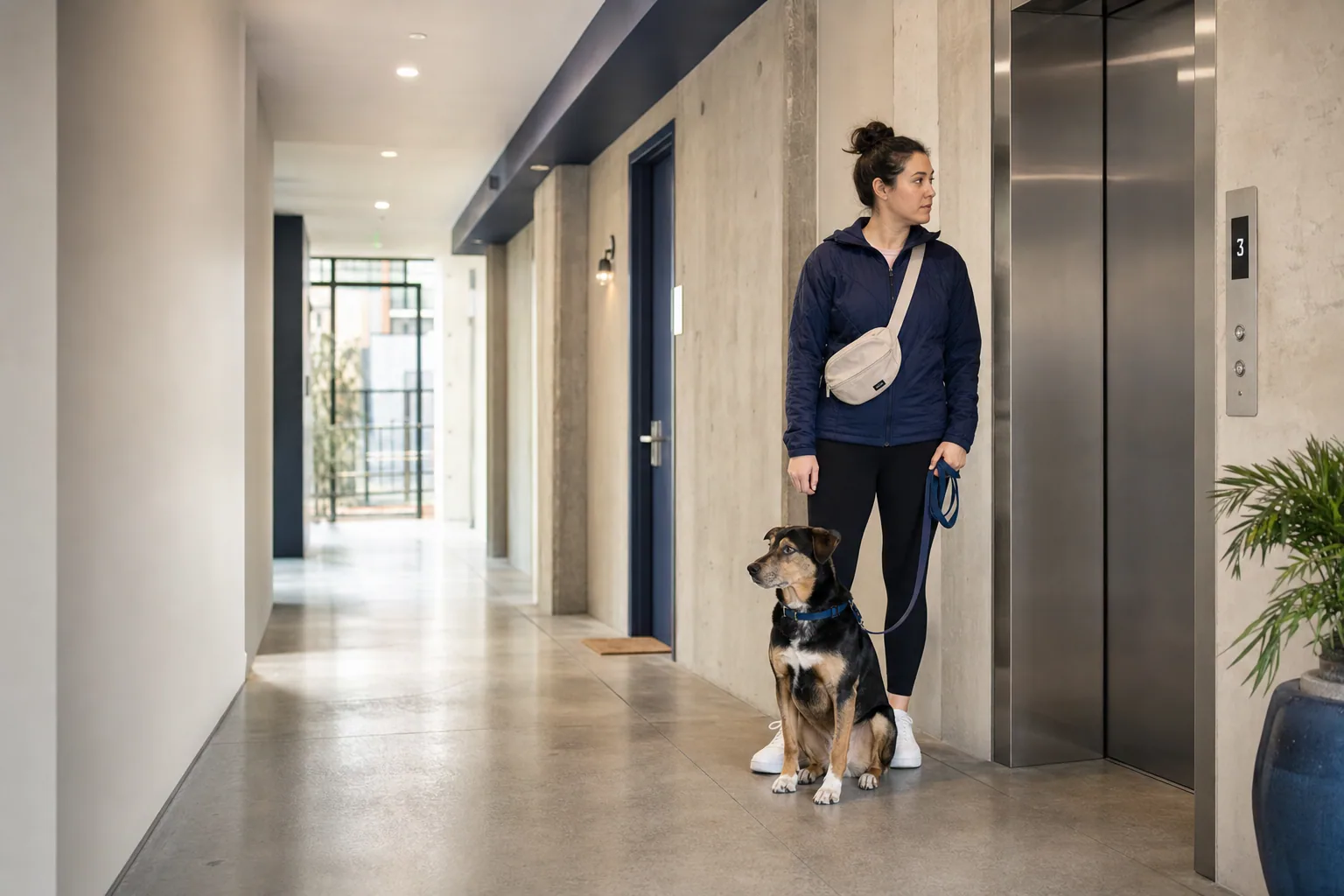
Step 01 Observe
Record the pattern before changing the routine
For several days, record the time, location, likely trigger, duration, and what helped the dog settle. A phone camera or audio monitor can reveal what happens when you are away, but it should not replace professional help when distress is severe.
| Record | What it can reveal | Example |
|---|---|---|
| What happened first | Likely trigger | Footsteps stopped outside the door |
| Body language | Excitement, fear, or distress | Loose posture versus frantic pacing |
| Duration | Whether the dog recovers | Three barks, then settles |
| What changed it | Useful management clues | Moving away from the entryway |
Step 02 Classify
Match the plan to the likely trigger
The dog responds to footsteps, doors, elevators, voices, or deliveries.
The dog needs a potty break, movement, rest, food, or a predictable transition.
The dog expects access to a person, dog, doorway, window, or activity.
The dog may pace, pant, vocalize persistently, attempt escape, or struggle to recover.
Step 03 Respond
Reduce rehearsals while building the new response
Management is not failure. Reducing exposure to a repeated trigger can create the breathing room needed for learning. The useful response depends on the category, intensity, and individual dog.
- 01Change the environment
Move resting areas away from the entry, reduce visual access, or add steady background sound.
- 02Build a predictable alternative
Teach a calm station away from the trigger and reward recovery, not only silence.
- 03Adjust the routine
Test whether potty timing, rest, enrichment, or support services reduce the pattern.
- 04Review the evidence
Look for meaningful improvement over time rather than expecting an instant fix.
Get qualified help
Do not manage severe distress alone.
Seek qualified behavior and veterinary support if barking is persistent, escalating, accompanied by panic or escape attempts, or creating immediate housing risk. Sudden behavior changes also warrant veterinary attention.
Sources, evidence, and limitations
This template demonstrates how Apartment Dog Living will make evidence and review status visible. The guide remains a draft until consequential claims have current primary sources and a qualified behavior reviewer.
- Evidence status
- Source ledger in development
- Community evidence
- Not yet included
- Geographic scope
- English-speaking apartment markets; legal guidance excluded
- Next review
- After specialist review